On the waterBenalmádena
Banana boats and towed inflatables, and the age rules
Jun–Sep
Ten minutes behind a boat, sold per head, and the cheapest way to get a whole family onto the water here. Which shape does what, why the ride does not leave until enough people have paid, who actually sets the minimum age, and how to tell before you pay whether the driver intends to tip you off.
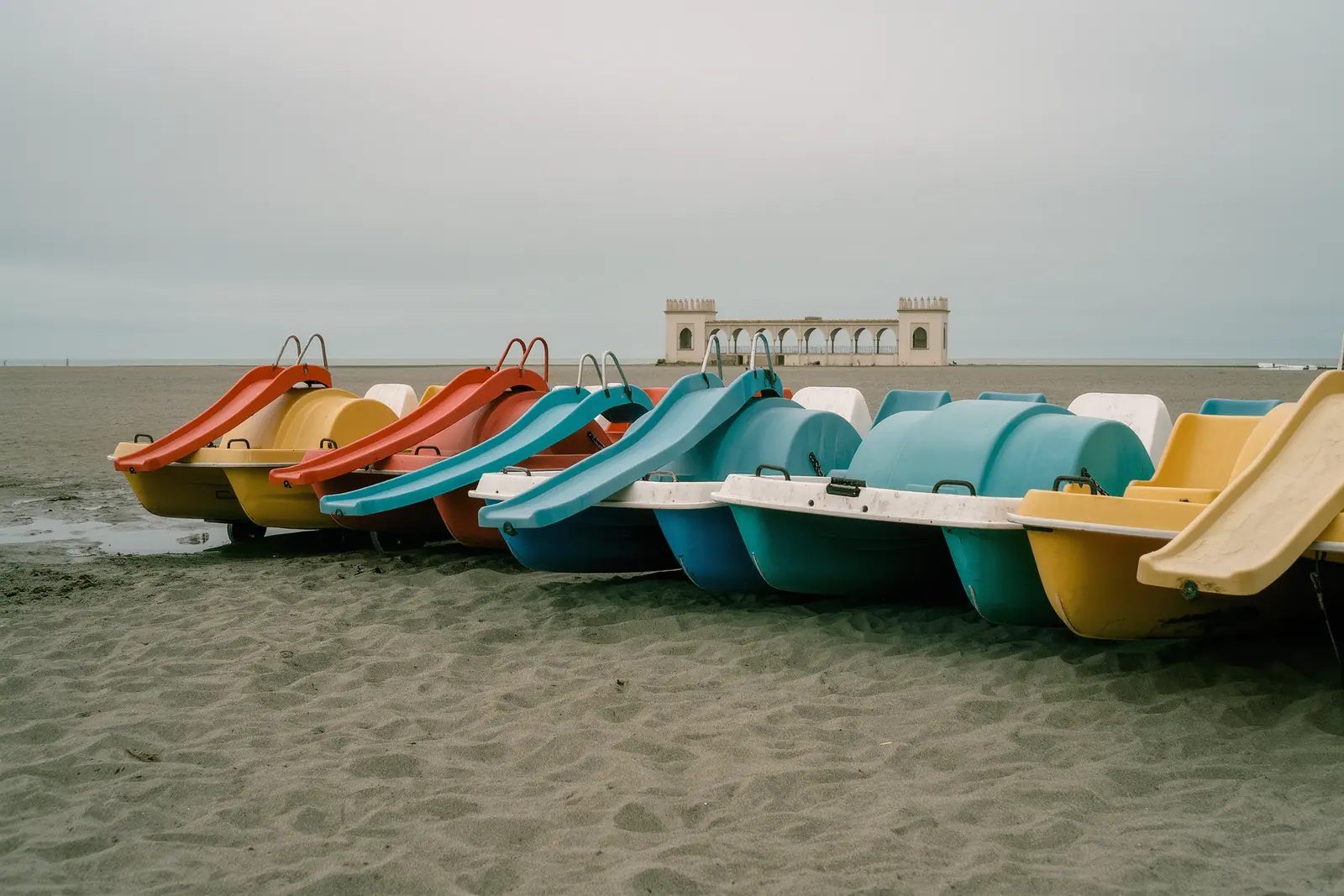
There is a rope, a small outboard boat and something inflatable at the end of it, and along the Benalmádena beaches in July there are several of these running at once between the bathing buoys and the open water. The ride lasts about as long as it takes to queue for it, and it is the cheapest way to get five people onto the water for an afternoon.
It is also the rental with the loosest rules and the widest gap between what people expect and what they get. Almost all of that gap is age limits and whether you are going to end up in the sea.
The shapes, and what each one does
They look interchangeable on the sand. They are not.
| Shape | Riders | How it rides | Realistic minimum |
|---|---|---|---|
| Banana | 4–6 astride | Slow, bouncy, easy to hold | Younger children, with an adult behind |
| Sofa or couch | 3–5 seated | Wider, more stable, gentler | The most family-friendly option |
| Ring or donut | 1–2 | Spins, corners hard, tips easily | Teenagers and up |
| Flying shapes | 2–3 | Lifts and lands. The fast one | Confident older kids and adults |
If you are taking a mixed-age group out for the first time, the sofa is the one to ask for. It is the least photogenic and the least likely to end in tears, and small children can sit between two adults rather than clinging to a cylinder.
Why the boat is not leaving yet
Towed rides are sold per person and the boat does not go out until there are enough people to make the trip worth the fuel. On a quiet June afternoon that can mean twenty minutes on the sand in a life jacket waiting for two more customers.
Two ways round it. Turn up in a group of five or six and you are the boat. Or ask what it costs to pay for the empty places and go now — bases will usually quote a figure, and split across a family it is often less than the difference between a good afternoon and a fractious one.
The slot itself is short. Ten to fifteen minutes is standard, and a chunk of it is the run out from the beach and the run back, at displacement speed, through the channel in the buoys.
The waiting is the part to manage. You pay, you are given a life jacket, and then you stand on hot sand in it with no shade until the boat comes back. On a July afternoon that is a genuinely uncomfortable twenty minutes for a small child, and it is where most of the pre-ride tears happen. Pay, then go back to your parasol and watch for the boat rather than queueing at the rope. If you are booking two rides for a larger group, ask whether they can be run back to back — most bases will, and the second one is frequently cheaper.
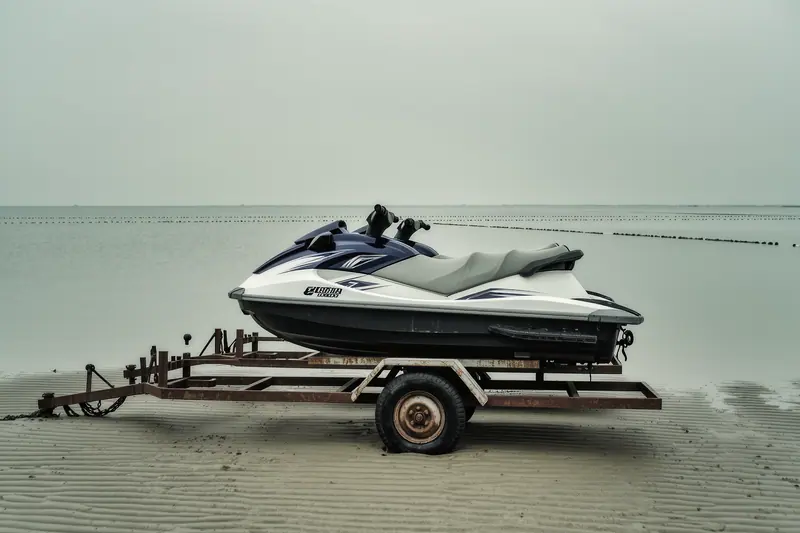
Who sets the age limit
Not the town, and not any national rule you can look up. Minimum ages on towed inflatables come from the base’s insurance policy, which is why the answer changes as you walk two hundred metres along the sand.
That has three consequences worth knowing before you take a disappointed child to a rope barrier:
- Ask first, from the sand, before anyone changes. The answer takes ten seconds.
- Expect different limits for different shapes at the same base and the same price point. A seven-year-old refused on the ring may be fine on the banana.
- Expect a weight limit too. Some shapes have a stated combined maximum, and it is the reason a family of six gets split across two runs.
Life jackets are supplied and worn, and this is one activity where you should look at the fit rather than accept the one handed over. A jacket that a child can be lifted out of by the shoulders is too big, and in the water it rides up over the chin.
The bit nobody mentions
Being tipped off is not the risk. Being tipped off badly is.
Hold on with your hands, not with your arms wrapped through the handles. Shoulders get wrenched when a rider is still attached to the inflatable and the rest of them is not. Keep your mouth closed on impact. Tuck your chin. And if you are riding with a small child, sit behind them and hold the handle, not the child, because you cannot let go of a child in time and you can let go of a handle.
Take off everything that is not attached to you. Glasses, sunglasses, jewellery and hearing aids all go in a bag on the sand. This is also the reason to think twice on a choppy afternoon: the ride is fun in flat water and a series of hard slaps in a swell.
Whether it is worth it
Per head on the water, nothing else here comes close. Fifteen euros or so for ten minutes reads badly against an hour on a pedalo until you notice that five people rode at once and everybody remembers it.
Where it is not worth it: for adults on their own, who will find it brief; on a marginal sea, when it stops being funny; and for any child who is unsure in deep water, because the ride puts them in it and the boat takes a minute to come back round. In that case a small boat with a canopy buys a much better afternoon, and a supervised machine in the buoyed area is the better next step for the teenager who wants speed rather than a rope.
What to check before you book
- Ask the minimum age for the specific shape you are booking. It differs between a banana and a high-speed ring on the same rope, at the same base.
- Say out loud whether you want to be tipped off or not, and get an answer. The driver decides, and they will usually do what you ask if you ask first.
- Check the life jacket fastens properly on the smallest person going. A jacket that rides up over a child’s ears in the water is the wrong size.
- Take off glasses, earrings and anything not attached. There is no lost property at the bottom of the sea.
- Ask how many people they need before the boat goes out, and whether you can pay for the empty seats to leave now.
- Ask where you get back on from — the sand, the shallows or the tow boat — before you are two hundred metres out and thinking about it.
Questions people actually ask
- How much is a banana boat ride in Benalmádena?
It is priced per person for a ride of roughly ten to fifteen minutes, and in high season it typically sits in the mid-teens of euros a head, with the faster shapes costing a few euros more. It is the cheapest thing on the beach per person on the water. Bases discount for a full boat, so a group of six negotiating together does better than six individuals turning up separately.
- What is the minimum age?
There is no single answer, because bases set it from their insurance terms rather than from a national rule, and it varies along one beach. Expect somewhere in the range of six to eight for the gentler shapes with an adult alongside, and higher for the fast ones. Ask before you queue, and treat a shrug as a no rather than a yes.
- Will they throw us off deliberately?
Usually, unless you say otherwise. Tipping the inflatable is the point of the ride for most customers, and drivers assume it is wanted. If you have a nervous child, a bad shoulder or a hearing aid you forgot to leave on the sand, tell the driver on the beach and again with a hand signal from the water. Most will run a flat ride without complaint.
- What happens if the sea is choppy?
The rides stop when the tow boat cannot work safely, which is well before the beach looks bad. An easterly puts a short swell along this coast and towed rides are one of the first things to close. On a marginal day the ride still runs and it hurts more, so if you have small children aboard, look at the water before you pay.